Can AI Solve Fashion's Excess Inventory Problems? – Latest Fashion Trends & Style Tips October 10, 2025 at 05:30PM
📰 Can AI Solve Fashion's Excess Inventory Problems?
✨ Fashion Insights & Trends:
As the world becomes increasingly reliant on AI (for better or for worse), fashion brands have started to explore the technology not only as a catalyst for design, but also as a solution to inventory management, merchandising and the ever-shifting social media trend cycle. An August 2024 survey from McKinsey found that 64% of retail leaders had conducted AI pilots, while 2025 data from Salesforce shows that 75% of retailers now believe AI is essential to compete.
Fueled by limited regulations and data-hungry brands, tech companies are rushing to capitalize on fashion tech's resurgence, promising brands the opportunity to give their customers exactly what they want, when they want it, with cost savings to boot. Is it all too good to be true?
The Trouble with Trends

Photo: STORYPLUS/Getty Images
While certain trends — think baggy jeans over skinny jeans, cardigans and pumps — persist for years, other "micro" ones — think "mob wife," "tomato girl" and other TikTok-generated aesthetics — last only a few weeks to months. Fast-fashion labels keep up with a spray-and-pray approach, churning out thousands of items per day with individually contracted suppliers, and contributing heavily to the 85% of clothing discarded annually. Luxury houses and middle-of-the-road brands do their fair share to contribute to fashion's excess inventory problem as well.
The "whys" behind overproduction supersede trend cycles: pressure to drive buzz via constant new drops, competing economies of scale, fulfilling factory minimums. Ultimately, brands are terrified of missing out on a sale, and would rather produce too much than too little. To this day, we don't know the full extent of clothing waste, as companies are notoriously picky about the data they share publicly — but it's estimated that, overall, around 40% of clothing produced globally is unsold and thrown away.
This is a problem not only for the environment, but also for bottom lines. Discounting unsold inventory eats into profit margins — just look to Ssense for a lesson in the dangers of consistent sales. The Business of Fashion reported earlier this year that the fashion industry's excess stock was likely worth anywhere between $70 billion and $140 billion in sales in 2023. The same warning has been stated clearly for years: The only real fix for waste is to prevent it at the source. But predicting demand ahead of time is hardly a perfect science — or at least, it didn't used to be. Enter a new wave of AI-driven startups, promising to help brands design smarter and place products more strategically in stores.
Algorithms at the Drawing Board
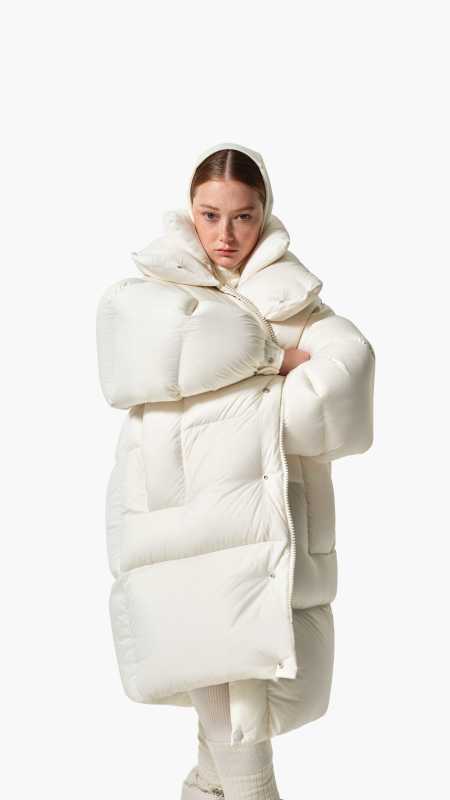
Photo: Courtesy of Moncler
Some designers have already invited AI into the studio, hoping to fine-tune designs until they're the perfect match for their audience's tastes. Unsurprisingly, fast fashion brands have been some of the earliest adopters — but in their hands, AI fuels, rather than addresses, overproduction. Shein uses proprietary AI to detect emerging trends in real time, instantly triggering small batch production of items that look like a TikTok feed brought to life. Thousands of individual producers for the fast fashion empire have access to the technology, which allows the user to analyze customer preferences to accurately predict demand. This allows Shein to add around 300,000 new items to its website each month.
While fast fashion is the most obvious candidate for AI-led design, luxury brands struggling to beat the broader industry slowdown and get customers to swipe their cards have slowly but surely come to the table. Maison Meta, the generative AI agency behind activations from luxury houses such as Dolce & Gabbana, works with designers to preserve their brand identity and creative process while augmenting them with AI. New York-based fashion designer Norma Kamali partnered with the agency on a proprietary model that reimagined her signature black garments with silver studs, while Italian luxury outerwear label Moncler collaborated with it last year to launch an updated version of its iconic Verone jacket. More recently, Alice + Olivia founder Stacey Bendet revealed that she used AI at the beginning of the design process for her Spring 2026 collection.
AI's design capabilities, as they exist today, haven't won over everyone. An executive I spoke with felt that the results AI produced for her brand were still a far cry from the quality that the company's designers are able to procure. For now, it seems better suited to back-end operations than to creative processes.
AI in Fashion's Back Office
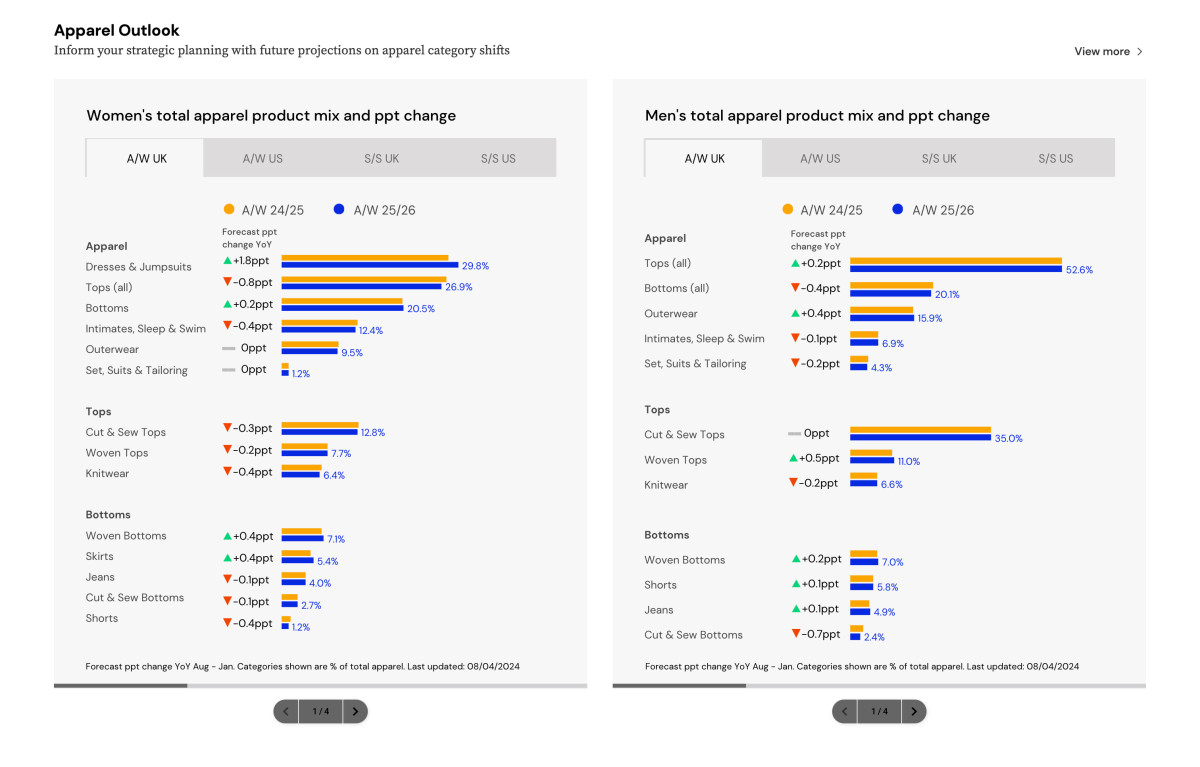
Image: Courtesy of WGSN
If AI isn't ready to replace designers, it's already proving indispensable in the back office, where brands and retailers are using it to streamline inventory and merchandising. Widely used digital wholesale platforms like Joor and Lightspeed's NuOrder have launched AI tools to help brands strike the right inventory balance and optimize their buys. Trend forecasting giant WGSN, whose tools are already in use by household names like Coach and Adidas, has also invested heavily in AI.
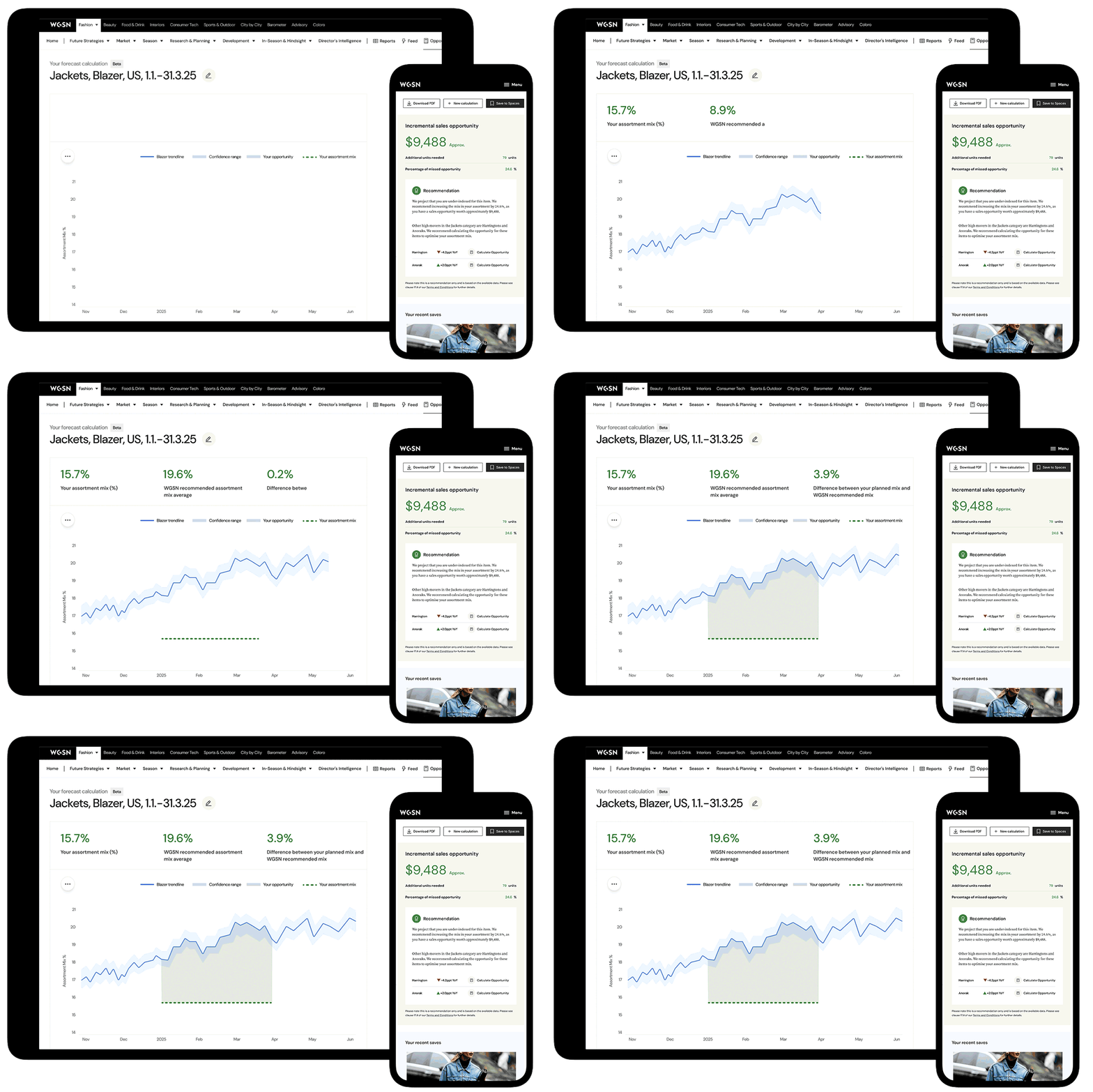
"The universal experience we find buyers have is a need to answer the question, 'How much money is really on the table?'" explains Francesca Muston, chief forecasting officer at WGSN. The company's Fashion Buying platform pulls from internal and external data to answer that question for brands with bespoke and actionable forecast recommendations. Tools such as the "Opportunity Calculator" allow buyers to assess the financial opportunity associated with a previous or future buy, while the "Assortment Builder" allows buyers to optimize their assortment mix. Each tool works by benchmarking brand-specific data with the WGSN AI data forecast, which pulls from e-commerce data, catwalk data, and search and social trends. The platform even offers a "TikTok Trading" section that helps brands repurpose their existing inventory to play into viral trends on the app.
But these days, TikTok is only the beginning of buyers' challenges. "There is an increasing amount of uncertainty in trade — look at the disruption caused by the tariffs — so being able to plan ahead… and to really understand what to prioritize when things go wrong, is highly valuable intelligence," according to Muston.
Gif: Courtesy of WGSN
While WGSN helps brands combat macroeconomic headwinds, Flagship, an AI-powered inventory optimization software, is helping brands get a pulse on what is happening within the four walls of their stores. The startup pulls from product data, inventory data and sales data to tailor storefronts for brands like Vuori, Mejuri and Madhappy. The seemingly arbitrary arrangement of performance joggers and hoodies, or earrings and necklaces in each store is thanks to an amalgamation of the brand's product data, inventory data and sales data tailored to the preferences of the customers in that geographic location.
Flagship's Founder and CEO, Simon Molnar, says the company's software primarily solves a people problem. "The brands that we're about to go live with [usually] have three visual merchandisers for nearly 400 stores," he shares. "They just don't have the resourcing or manpower to effectively get down to the level of granularity that they need." The granularity they need, according to Molnar, is best found in products over individuals. "I believe there is a lot of value that you can get out of analyzing product performance as opposed to analyzing consumer and demographic performance," he shares.
Molnar cites brands' push over the past 12-to-24 months to double down on brick-and-mortar, particularly through experiential retail, an observation reflected in broader industry trends. There is an inherent tension between this desire for physical experiences and brands' growing adoption of AI, but Flagship hopes to find a middle ground where AI helps bring brands and customers together in the real world. "The long-term view for me is to start blurring the lines between the online and the offline world and starting to have those experiences be more reflective of one another," Molnar noted.
Bringing in Consumer-Facing AI
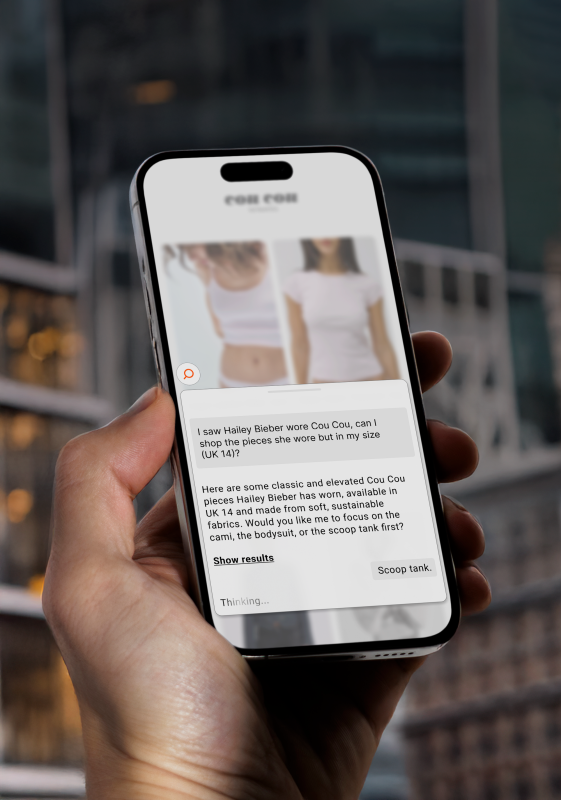
Photo: Courtesy of Depict
In addition to testing AI behind the scenes, brands are increasingly putting it in front of their customers as well, with recent data showing that around 60% of consumers are already using it for shopping — a number that will certainly grow now that OpenAI has introduced instant checkout capabilities in ChatGPT, and as Google continues to ramp up its AI shopping features. Ralph Lauren's new AI stylist Ask Ralph shows how even brands built on high-touch service are embracing digital assistants, while other brands and retailers are rolling out chatbots and natural language search at a rapid clip.
Depict AI, a visual merchandising startup based out of Stockholm, recently launched a GPT search feature to accompany its traditional offerings. The company has been quietly A/B testing the product since this summer with clients like Joseph and Nanushka. It enables a brand's in-site search to function as a conversational chatbot, allowing users to search for a "dress to wear to a September wedding in upstate New York" instead of a "green dress."
In traditional search, 10% to 15% of all queries return nothing, according to Axel Larsson, head of customer success at Depict AI. "We try to bring that down to about just under 2%," he says. Over the past three or so months that the company has tested its new product, Larsson has seen users increasingly use natural language queries (around 50% of users on the Joseph site). "Those kinds of questions give much richer data for the brands themselves," he observes. In other words, these front-end tools can provide more data to ultimately be used in the back end.
Esme Lampard, Senior Digital Content and UX Manager at Joseph, agrees. "It's going to help us in a way we haven't thought about," she elaborates, "which is [identifying] the end use of what our customers are shopping for, rather than literally the item they're looking for. It's actually why they're wearing it, and adding that storytelling piece and trend piece that maybe we didn't have before."
Related: By Letting AI Shop For Us, How Much of Ourselves Are We Giving Up?
What's Next?
AI has quickly shifted from experimental pilot projects to a core tool shaping both the supply and demand sides of fashion. Fast fashion players are proving the speed and scale of AI's potential, luxury houses are experimenting with more creative uses, and consumers are driving expectations higher by bringing their own AI habits into the shopping experience.
The real test will be whether AI becomes a tool that augments creativity and helps brands solve their chronic inventory problems, or one that accelerates trend fatigue and overproduction under a shinier guise. For now, AI in fashion design and planning is less about replacing designers and more about giving brands another, more personal lever to pull in a market that demands both speed and sustainability.
📌 Love fashion? Follow us for daily updates on our fashion blog! 🌟
🔹 #FashionTrends #StyleTips #OOTD #Can AI Solve Fashion's Excess Inventory Problems?


Comments
Post a Comment