3 AAPI Fashion Designers Discuss Heritage, Resilience and Participating in the CFDA x Genesis House Grant – Latest Fashion Trends & Style Tips February 05, 2026 at 06:30PM
📰 3 AAPI Fashion Designers Discuss Heritage, Resilience and Participating in the CFDA x Genesis House Grant
✨ Fashion Insights & Trends:
The fashion industry has a long-standing (and valid) reputation for being exclusive, and the velvet ropes that block off flashy parties and unaffordable price tags in ritzy boutiques are just the tip of the iceberg. It's one of those insular fields that feels impossible to break into without a certain level of privilege or connections.
This leads to situations like the houses of Dior, Chanel, Versace, Balenciaga, Balmain and Gucci each choosing to appoint white men with hefty resumes as their lead designers as recently as 2025. Meanwhile, the United States government is campaigning against diversity, equity and inclusion (DEI) initiatives and major retailers and brands are walking back on their own DEI programs. But while some of the most powerful people in the world are actively working against inclusivity, others are pushing back.
Since 2023, Korean automotive brand Genesis has partnered with the Council of Fashion Designers of America (CFDA) to support independent Asian American and Pacific Islander (AAPI) designers and their brands, offering $40,000 grants to three outstanding talents each year. With the money, the designers each create a three-look collection that "explores innovation while reflecting their Asian heritage and modernity, in alignment with Genesis' brand pillars," according to the CFDA. This year, Allina Liu, Kim Shui and Terrence Zhou of Bad Binch TongTong were selected for the grant, competing for an additional prize of $60,000.
But before designing these collections, they were provided with another means to help jumpstart their process: an inspiring, all-inclusive trip to Seoul (the home of Genesis). Fashionista got the opportunity to tag along and sit down with the designers for a roundtable conversation.
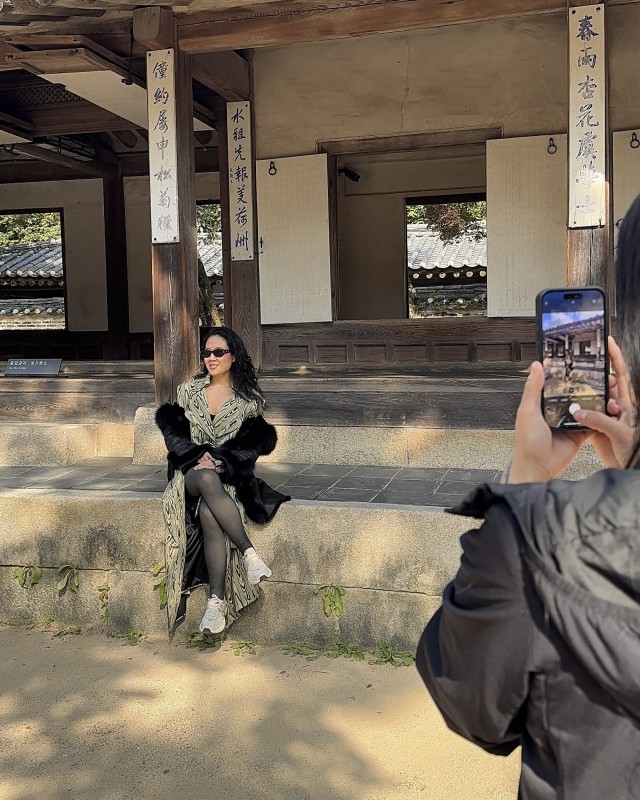
Photo: Courtesy of Brooke Frischer
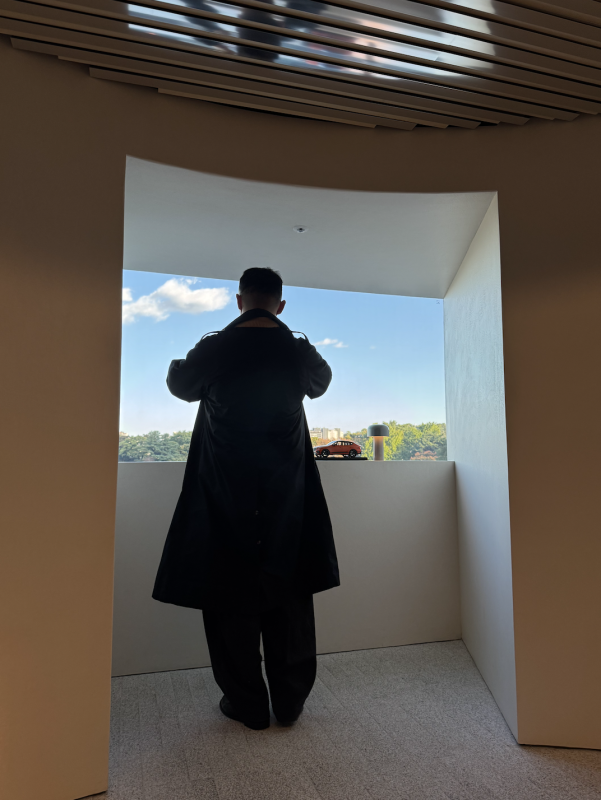
Photo: Courtesy of Brooke Frischer
The goal of the week-long experience is to immerse the designers in Genesis' culture via visits to the city's most famous attractions and, of course, the company's headquarters, showcasing how each car's design is influenced by heritage. "Every single element [of the cars] has a reason to be there, and it's all special," Shui told Fashionista at a breakfast table with Liu and Zhou. "It's interesting to see these more minimal interpretations of culture because it's definitely different from the way I express my culture through my clothing. It's interesting to see that contrast and that tension."
Liu, Shui and Zhou all have different relationships to their respective cultural backgrounds, making each of their experiences relating to Seoul completely individual and adding a unique richness to their resultant collections.
View the original article to see embedded media.
For Shui, a Chinese-American who spent the majority of her upbringing in Rome, Italy at an international school, embracing her Asian heritage came naturally: "I was always very proud to be Chinese because of my parents. If anyone [at school] made a comment, I'd be like, 'No, actually, you should try this.' And then people were appreciative."
Many of Shui's signature design elements are directly influenced by her Asian heritage, be they silk floral embroideries, dragon imagery or contemporary qipao dresses.
View the original article to see embedded media.
"I feel like my work has always been centered around women who have traditionally been sidelined — essentially women who are told to be quiet, to not have a say, and using the clothes as a way to be bold, be present, be seen," Shui explained. "Taking all of these different elements from my cultural background and just owning it has been really interesting. Expressing [my Chinese background] in my work has made it pretty decorative. It's way more maximalist. But it's interesting to see these more minimal interpretations of culture [in Korean design]."
Liu, who grew up in upstate New York, admitted that embracing her heritage took a bit more time, sharing that this grant "feels full circle" and like an opportunity to "finally celebrate" her Asian roots.
"Receiving this grant was really just more fodder for me to understand that I am in this space for a reason, that I can do it," she said. "The representation, growing up in a very homogenous [predominantly white] community — it was difficult and I felt singled out a lot of the time. And to be honest, I didn't even want to admit to myself that I was Asian for the longest time. I just really did not understand why I was different, why I hated it."
View the original article to see embedded media.
That childhood mindset of assimilation led to Liu's exploration of rebellion, leading her to launch her eponymous label with garments informed by BDSM. "Nawa shibari, which is the intricate knot-tying in Japan, is, in an odd way, one of the ways my heritage has impacted my work," she explains. "I want to say it's an homage to my culture, but I feel like it's in spite of my culture. Not in an aggressive, hostile way, but in the way it shaped my understanding of myself and my need to explore my identity through sexuality."
Liu continues, "In my 30s, though, I've gotten so comfortable [with my culture] and I'm so happy about it...I feel like I had to go through that to get to this point now, where I really love my heritage, understand how rich it is and all its depth and the influences that it's had on my life and my work."
Zhou, who was raised in Wuhan, China and moved to the U.S. at the age of 17 for college, shares a similar perspective to Shui's: "The first time I arrived in America, that was a very fast transition for me — to go from feeling that I'm the majority to the minority. But I didn't get bothered by the comments because I was so confident about my own identity," he said.
He launched his brand Bad Binch TongTong in 2021 with this self-assured spirit in mind. Zhou's otherworldly, avant-garde designs emanate from a place of fearlessness, a desire to be part of China's expansive contributions to art and show the impact of maximizing his community's voices.
"To be a part of the first grant that specifically supports AAPI [designers in America] is a very rare thing," Zhou said. "By people seeing the potential that you have to take it to another level by having X, Y, Z amount of resources is very impactful."
But Zhou also offered a different outlook on the grant: "I'm going to play a little bit of devil's advocate. Do Asian designers really need help? I feel that resilience has played a big part in our culture. Asian immigrants are everywhere, and they usually start from the lowest class when they immigrate to other countries and then move their way up," he explained. Shui chimed in: "We didn't have generational wealth, we had generational resilience."
Zhou agreed, adding, "I didn't come from a wealthy family. My parents didn't even graduate from high school. But I saw them working their asses off to provide a better abundance of resources for me and my sister, and that really struck me, how much resilience they have. And I feel those things should be celebrated in America. Asian people, we don't need help — we just need to be seen and heard."
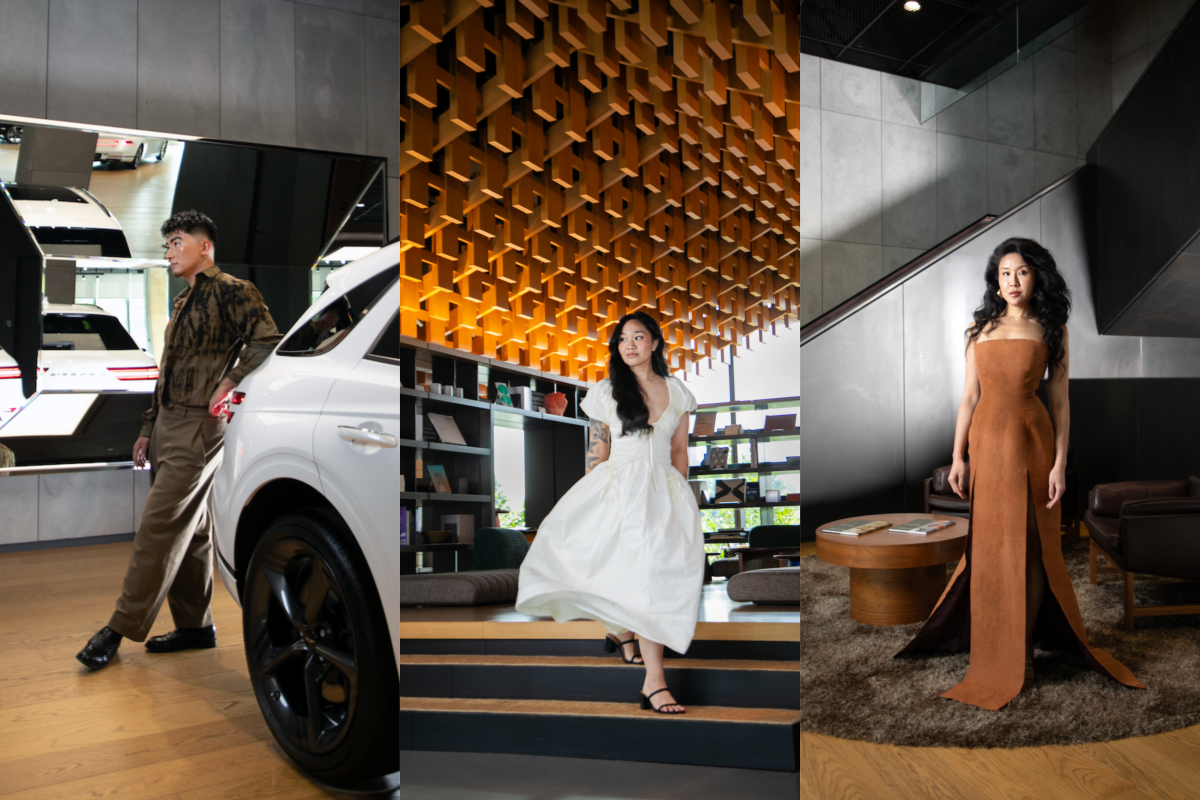
Photos: Courtesy of Genesis House x CFDA
Beyond financial assistance and visibility, the CFDA/Genesis House grant provides them with a one-of-a-kind experience of human connection through the immersion trip. This allowed Liu to view her culture in a new way.
"I've never connected with so many Asian Americans in my life until recently," she said. "I love hearing Terrence's opinion, too, because he grew up in China and had such a different experience. Getting to talk to [him] and hearing [his] pride in the culture...it feels great. It is rare. And I've not gotten to connect with anyone as I have here."
On Thursday, the three designers (and now, friends) will present each of their collections at Genesis House in New York City, unofficially kicking off New York Fashion Week. As for how their trip and the friendships formed will inspire their work? Liu, for one, is focused on the "empathy" and "user friendliness" of Korea.
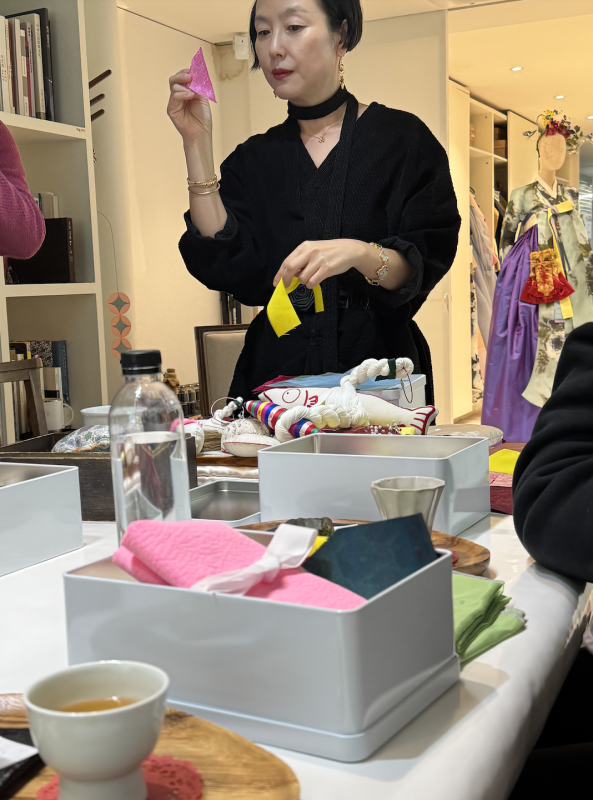
Photo: Courtesy of Brooke Frischer
"We took a design workshop, and [the teacher] talked about how, when you wrap a box, you're thinking about who you're wrapping it for. It's not just, 'I like this wrapping paper so I'm going to choose that," she said. "My line is so deeply personal, and that empathy resonates really hard with me. How I'm going to translate my brand identity as well as Genesis'? That's a TBD right now. But I'm thinking about the sensory experiences — sight, sound, smell. There are so many things to play with here."
When asked how he plans to balance the world of Bad Binch TongTong with Genesis, Zhou offered a simple answer: "I never balance, I go extreme. Go crazy or go home."
Disclosure: Genesis paid for Fashionista's travel and accommodations to visit Korea and report this story.
Please note: Occasionally, we use affiliate links on our site. In no way does this affect our editorial decision-making.
📌 Love fashion? Follow us for daily updates on our fashion blog! 🌟
🔹 #FashionTrends #StyleTips #OOTD #3 AAPI Fashion Designers Discuss Heritage, Resilience and Participating in the CFDA x Genesis House Grant


Comments
Post a Comment