This Startup Transforming Carbon Emissions Into Fashion Textiles Just Raised $7.5 Million – Latest Fashion Trends & Style Tips March 18, 2026 at 06:59PM
📰 This Startup Transforming Carbon Emissions Into Fashion Textiles Just Raised $7.5 Million
✨ Fashion Insights & Trends:
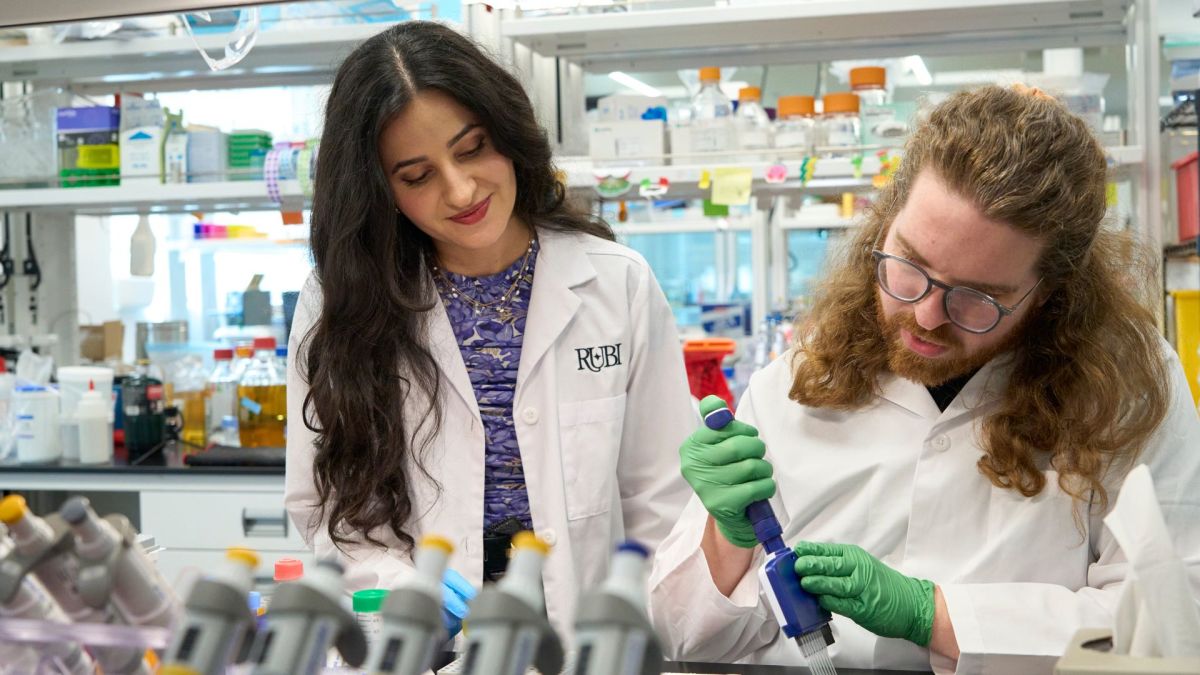
Photo: Courtesy of Rubi
Finding a solution to textile manufacturing's environmental degradation issue was never a mere pipe dream for Neeka Mashouf. It was something she and her sister, Leila, knew they could make a reality. And they have: In 2021, the duo launched Rubi, a company that uses technology to convert carbon emissions into cellulosic materials.
"Rubi's technology mimics and improves upon how trees naturally create materials. Just as trees convert CO2 [carbon dioxide] into their building blocks, Rubi's platform transforms industrial carbon emissions into valuable materials — but without requiring the tree itself," Mashouf tells Fashionista. "The result is pure cellulose that can go straight into existing textile manufacturing to be spun into yarn; no harsh chemicals, no farmland [and] no trees required."
The mechanics behind this approach are Rubi's proprietary cell-free enzyme platform, which uses specialized enzymes to convert abundant carbon sources, such as CO2, into complex materials, including cellulose polymers.

Photo: Courtesy of Rubi
Upon its launch, the company attracted immediate attention from heavy-hitting investors such as H&M Group and Patagonia, and raised $4.5 million in seed funding led by Talis Capital and Necessary Ventures. Last year, Rubi gained significant commercial traction by signing multi-year offtake term sheets worth over $60 million with leading fashion brands and manufacturers, doubling its commercial partnerships and completing successful fiber performance testing with multiple partners.
On Tuesday, Rubi announced a $7.5 million funding round co-led by AP Ventures and FH One Investments to scale its production system, enable further commercialization and enhance its engineered enzymes.
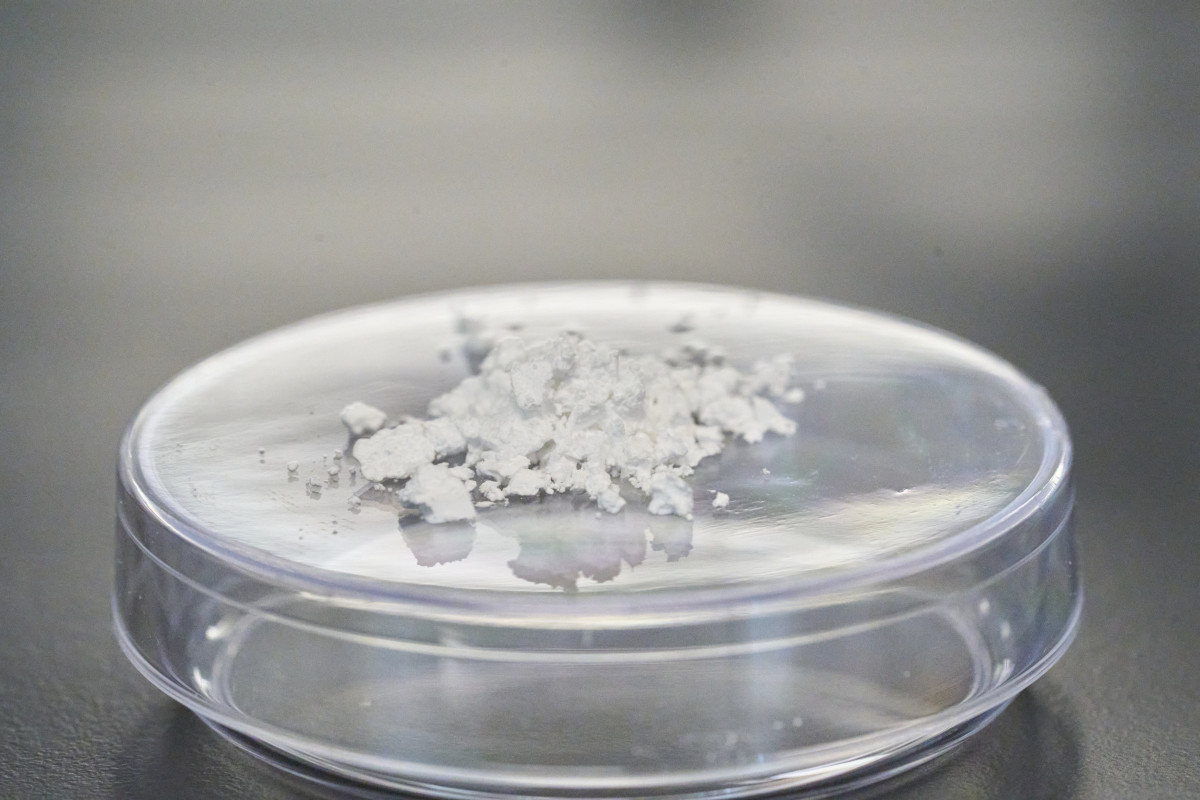
Photo: Courtesy of Rubi
"Our overarching goal is to meet strong global demand for modular and affordable manufacturing of essential materials from waste carbon across fashion, CPG, aerospace and chemicals verticals," Mashouf explains.
The company has already been working with major fashion brands, including Reformation, Nuuly, H&M and Ganni. For the latter, Ganni and Rubi teamed up in June 2023 to debut the world's first yarn made from carbon dioxide through a fully enzymatic process.
A common setback in fashion's pursuit of a more sustainable supply chain is that the most innovative tools are not scalable or cost-efficient compared to the traditional systems already in place. Rubi's technology, however, addresses these obstacles: "Our system offers 10x cheaper CapEx needs compared to traditional infrastructure and can be deployed in modular units at the point of need — meaning brands don't need to rebuild supply chains from scratch," notes Mashouf. It can also be on-shored from anywhere, reducing logistical costs and making it capital-efficient.
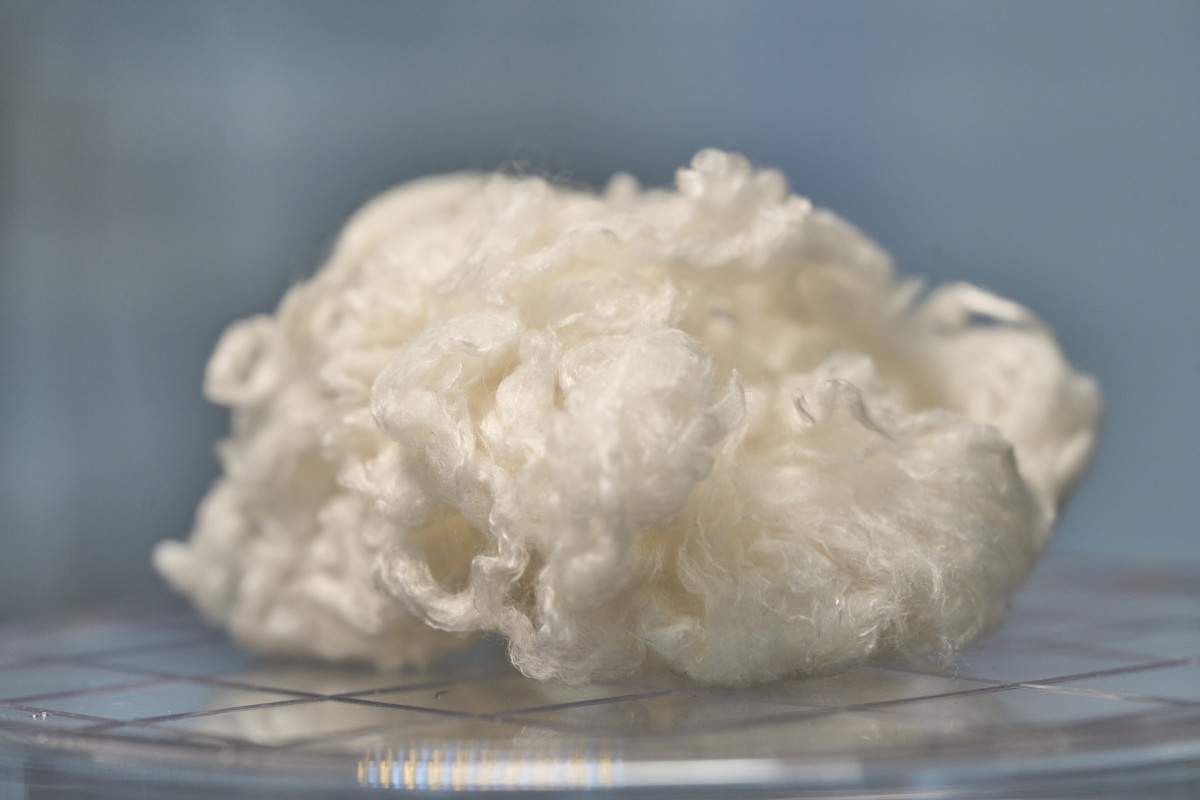
Photo: Courtesy of Rubi
Perfecting this system has been years in the making. The sisters began their scientific endeavors when they were only 15 years old, focusing on artificial photosynthesis and bioengineering. That evolved into an interest in finding a scientific solution for the environmentally harmful manufacturing system. "We combined our expertise to tackle one of the industry's greatest challenges: transforming manufacturing to work in harmony with nature rather than against it," Mashouf says. "We bootstrapped Rubi in a public biohacking lab, determined to prove that CO2 could become a valuable resource rather than a harmful waste product."
While garments made from Rubi's cellulosic textiles haven't entered retail yet, Mashouf emphasizes that product durability meets or exceeds industry standards, and consumer goods will not be more expensive. Its long-term goal is to commercialize its technology via an industrial demonstration-scale system and operate full-scale production facilities.
"We're building a manufacturing system that strengthens industrial competitiveness. The broader vision is a new market category entirely: products derived from carbon waste, produced modularly and affordably, on-shored wherever they're needed," Mashouf says. "We see Rubi at the center of that shift, and the commercial traction we've seen so far tells us the demand is real."
📌 Love fashion? Follow us for daily updates on our fashion blog! 🌟
🔹 #FashionTrends #StyleTips #OOTD #This Startup Transforming Carbon Emissions Into Fashion Textiles Just Raised $7.5 Million


Comments
Post a Comment